Three books, one deal cycle
Demystifying M&A explains how a transaction works. The two books that followed go where most first deals go wrong: the owner-led company that has never bought anything, and the year after the signature.
Which one should you read first?
You are new to M&A - Demystifying Mergers and Acquisitions
The vocabulary, the five-step process, valuation, negotiation, and the Top 10 Rules. Start here if the word "LOI" still makes you nervous.
You run a small or mid-sized business - M&A for SMEs
How a company without a corporate development team builds a case, a team, and a playbook for its first acquisition, and when it should not integrate at all.
The deal is signed - The M&A Integration Handbook
Day one, the first 100 days, months four to twelve, and the accounting, people, and technology work that turns a purchase into value.

Demystifying Mergers and Acquisitions
A guide for aspiring executives
The book this site is built around: the fundamentals, the soft factors, valuation, the five-step process from strategy to integration, sell-side deals, after-action reviews, and the M&A Top 10 Rules.
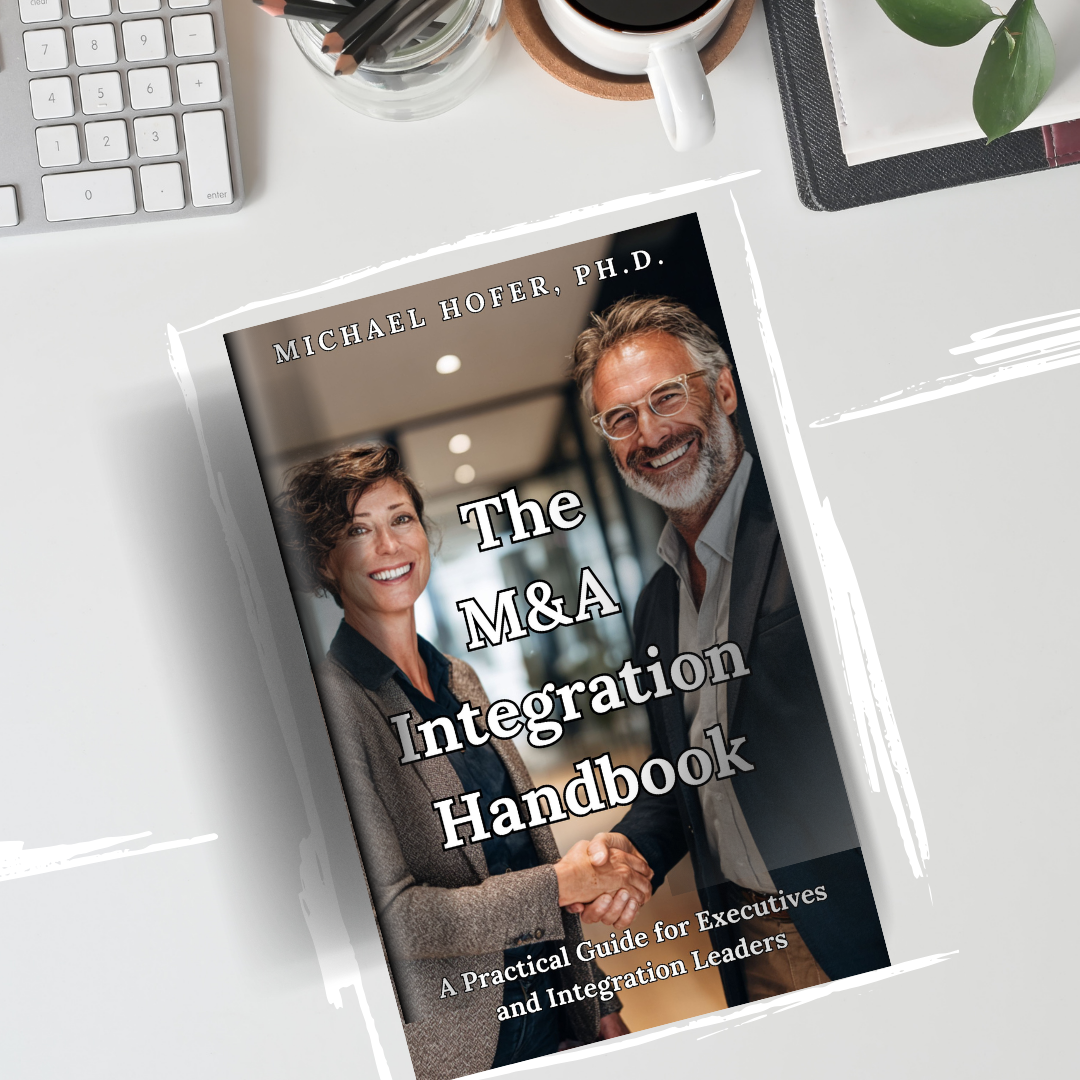
The M&A Integration Handbook
A practical guide for executives and integration leaders
The real work begins after you sign. Integration is where an acquisition creates value or destroys it, and it is the part of the deal that gets the least preparation because everyone is exhausted from getting to closing.
This handbook is organized the way an integration actually unfolds: a playbook framework and integration scenarios up front, then day-one readiness and the first 100 days of stabilization, then months four to twelve, when organizational design, culture, operations, technology, and cybersecurity are aligned to the strategy. Separate parts cover the accounting and finance work, purchase price allocation and goodwill, reporting and controls, treasury and risk, and the people work of human capital and change management. Every chapter ends with actions and a short checklist, because the point is to use it during an integration, not to read it once.
Inside
Chapters in six parts, structured by integration phase rather than by function
The Integration Playbook Framework and deal-specific scenarios
Day One Readiness, with a full checklist in the appendix
Purchase price allocation, goodwill, financial reporting, controls, treasury, and risk
Building integration as a repeatable capability, and where integration is heading next
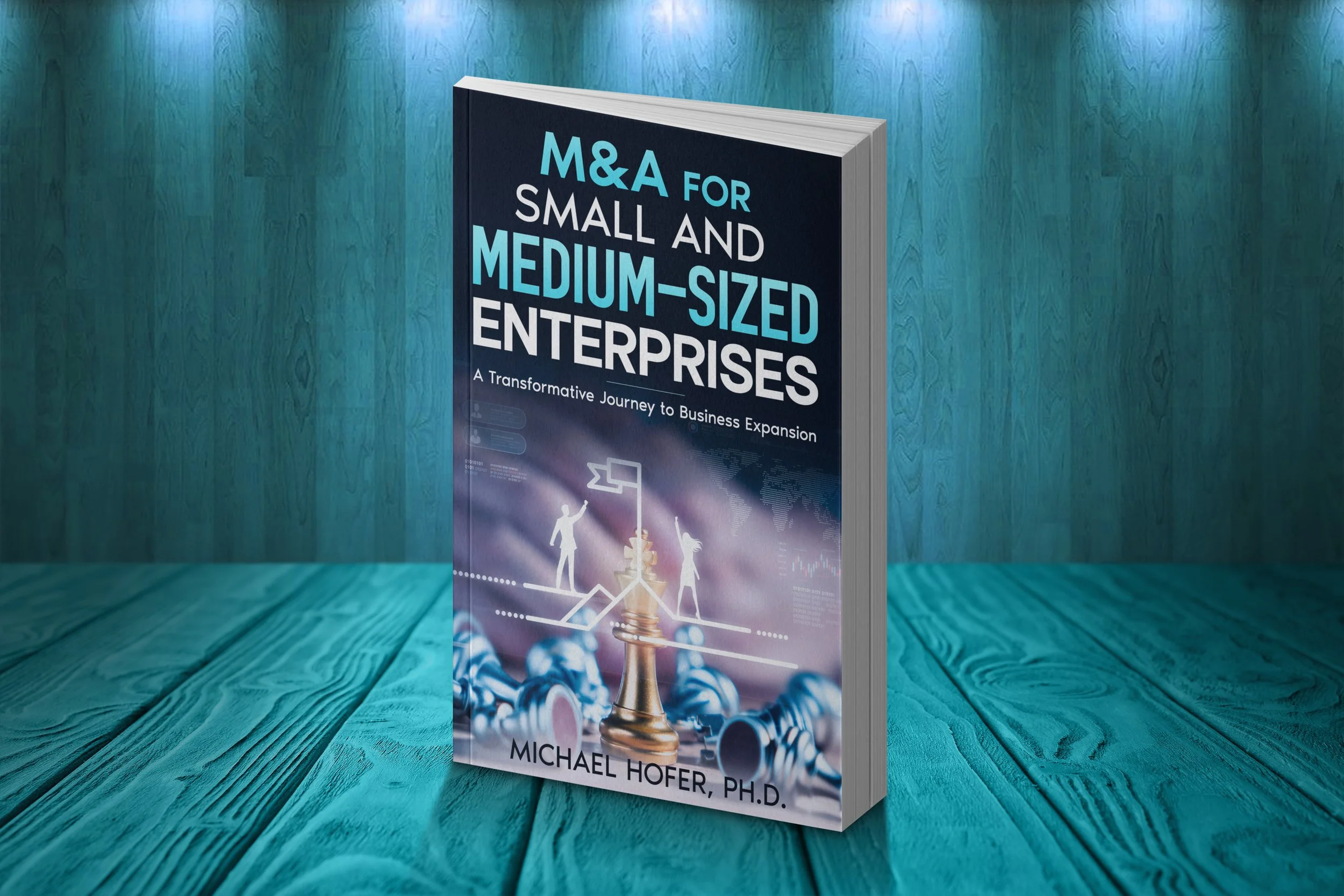
M&A for SMEs
A transformative journey to business expansion
Most M&A books assume you have a corporate development department, a bank, and a budget for both. This one assumes you have a good business, a small leadership team, and a growth ceiling that organic expansion will not break through.
It walks an owner or SME executive through the whole journey: why M&A is accessible to companies of every size, how to build a deal team from the people you already have plus the right outside experts, and how to construct what I call the M&A Trio, the strategic, financial, and operational case that has to hold up before you sign anything. The middle of the book covers strategy, financing, valuation, legal and compliance, talent, phased due diligence, the confidential information memorandum, and negotiating from your best alternative. The final part is about what happens after closing, including a chapter most books skip: when the smartest strategy is not to integrate the acquired company at all.
Inside
Chapters in four parts, from scaling smart to building your own M&A playbook
The M&A Trio: strategic, financial, and operational cases for an acquisition
Due diligence in phases, so an SME can spend money only as confidence grows
The case for a non-integration strategy, and when to choose it
Six working checklists: basic M&A, investment thesis, common pitfalls, M&A playbook, and the CIM, plus a glossary of key terms
Read them together
The three books are written to be read in sequence by the same person as their career moves through a deal, but each stands on its own. If you are a finance leader, read all three. If you are an owner considering a first acquisition, start with M&A for SMEs and keep the Integration Handbook for the day the deal closes.
For the courses, advisory work, and the M&A checklist referenced in the books, visit bymichaelhofer.com.